
Reducing the death toll from work-related driving
More people die on UK roads while driving for work than in any other work-related activity. The Health and Safety Executive estimates that work-related driving accounts for around a third of all road deaths. Yet the management of work-related driving risk receives a fraction of the attention given to workplace safety in other contexts.
The Legal Framework
The Health and Safety at Work Act applies to work-related driving. Employers have a duty to manage the risk of driving for work just as they manage other workplace risks. The Corporate Manslaughter Act extends this to cases where management failure contributes to a fatal road incident. Individual managers can face personal liability where their decisions contribute to a serious or fatal incident.
The Gap Between Awareness and Action
Most fleet operators are aware of their legal obligations. The gap is between awareness and systematic management. Effective work-related road risk management requires a documented risk assessment, a written policy, defined management responsibilities, and operational controls that are consistently applied.
Operators who have this framework in place are both safer and better protected legally than those who rely on informal arrangements and general safety awareness.
Technology as a Risk Control
Camera systems, telematics, and fatigue detection technology are recognised controls for work-related road risk. Their presence in a fleet demonstrates that the operator has taken practical steps to manage the risk. Their absence, when combined with a serious incident, creates a significant liability exposure.
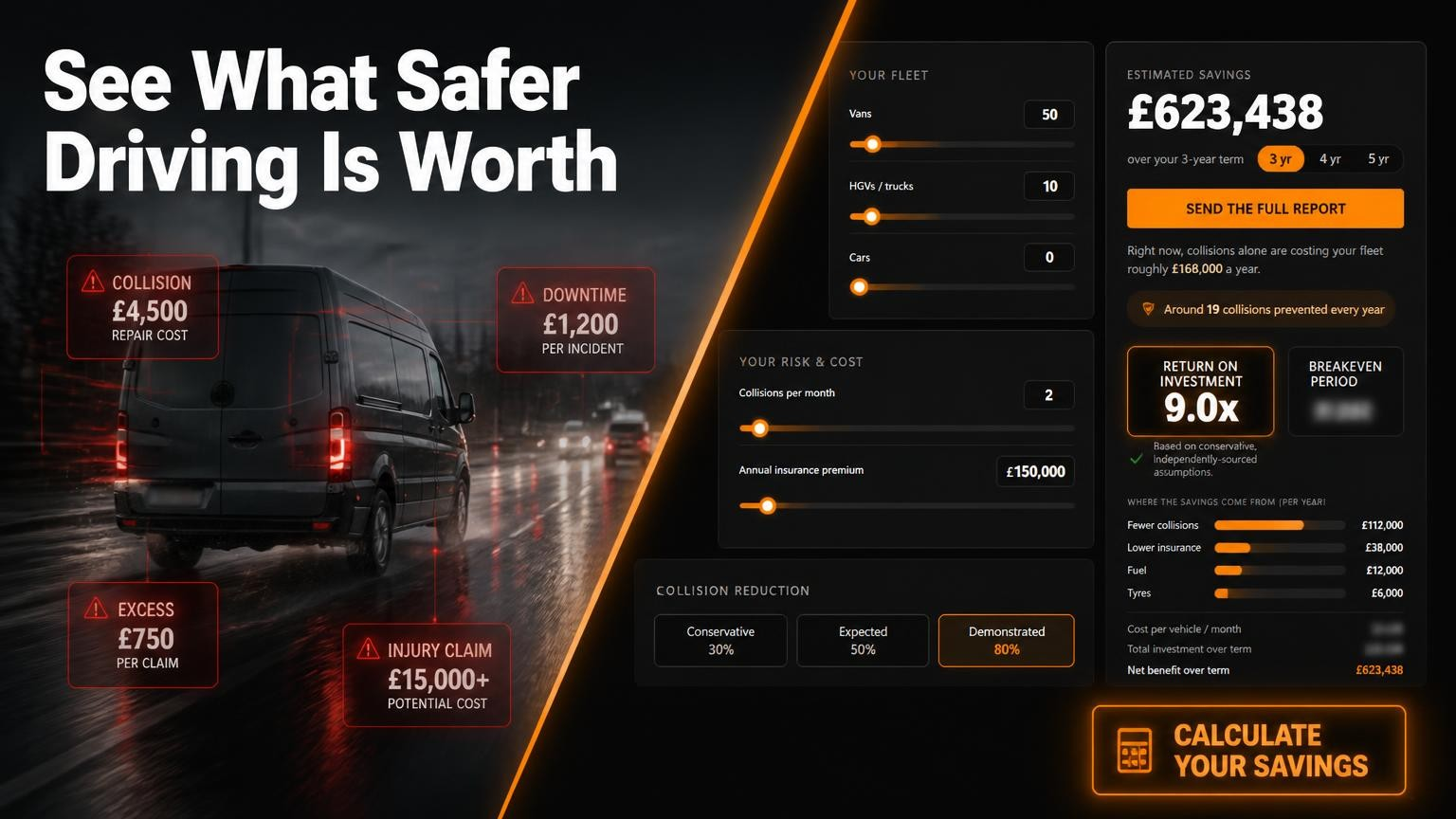
The investment case for safety technology is not only financial. It's a risk management obligation.
Want to see this on your own fleet? Talk to our team.
We can show you how Exeros helps reduce road risk and operational cost across your vehicles.

Table of contents
Related insights


Stay alert and informed
UK regulatory updates, fleet efficiency case studies and safety insights, sent to your inbox.
Talk to the teamRead more from Exeros

Talk to our team about your fleet's specific challenges and how we solve them.