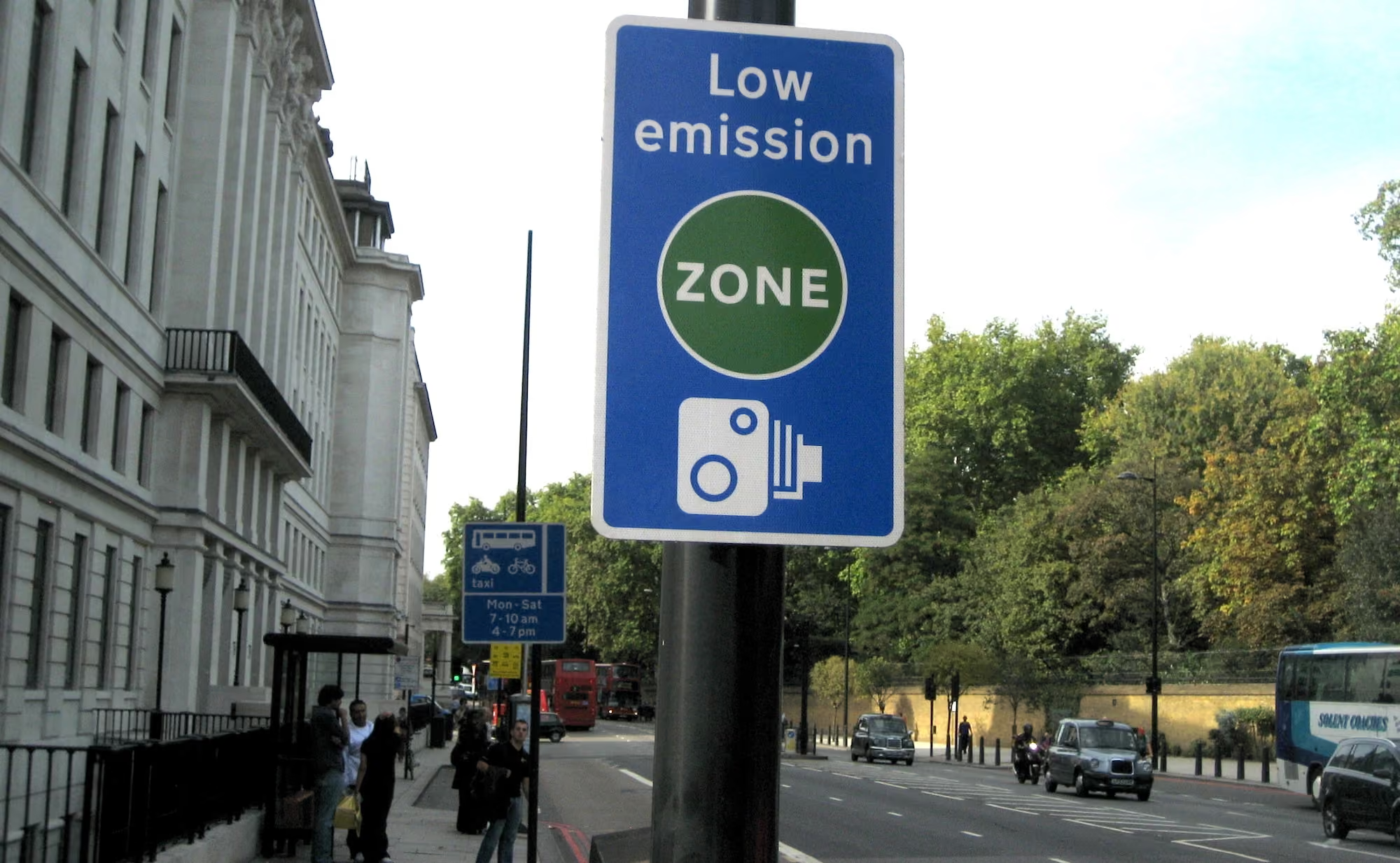
Ultra Low Emission Zone (Ulez) In London to reduce air pollution
London's Ultra Low Emission Zone (ULEZ) represents one of the most significant developments in urban air quality policy in recent years. For fleet operators running vehicles in the capital, understanding the scheme, its charges, coverage, and vehicle standards, is essential.
Background
Air pollution in London has long exceeded legal limits, with nitrogen dioxide (NO2) levels in many areas significantly above EU and UK guidelines. The ULEZ was introduced as a measure to reduce vehicle emissions and improve air quality in the most densely populated areas of the city.
How ULEZ Works
The ULEZ operates 24 hours a day, 7 days a week, 365 days a year. Vehicles that do not meet the emission standards are charged a daily fee: £12.50 per day for cars, motorcycles, and vans; £100 per day for heavy vehicles including lorries, buses, and coaches. Vehicles must meet Euro 4 or better for petrol (generally registered after 2006) and Euro 6 or better for diesel (generally registered after 2015) to enter without charge.
Impact on Fleet Operators
For operators running older diesel vehicles, ULEZ compliance is a significant cost consideration. Options include replacing non-compliant vehicles with newer compliant models, retrofitting vehicles with approved emission reduction technology, paying the daily charge for non-compliant vehicles, or restructuring routes to avoid the zone where possible.
The long-term direction of travel is clear: stricter emission standards and expanded coverage. Fleet operators who invest in compliant vehicles now will be better positioned as regulations tighten further.
Want to see this on your own fleet? Talk to our team.
We can show you how Exeros helps reduce road risk and operational cost across your vehicles.

Table of contents
Related insights

Stay alert and informed
UK regulatory updates, fleet efficiency case studies and safety insights, sent to your inbox.
Talk to the teamRead more from Exeros

Talk to our team about your fleet's specific challenges and how we solve them.